Captcha's Final Puzzle: The Silent Sentinel

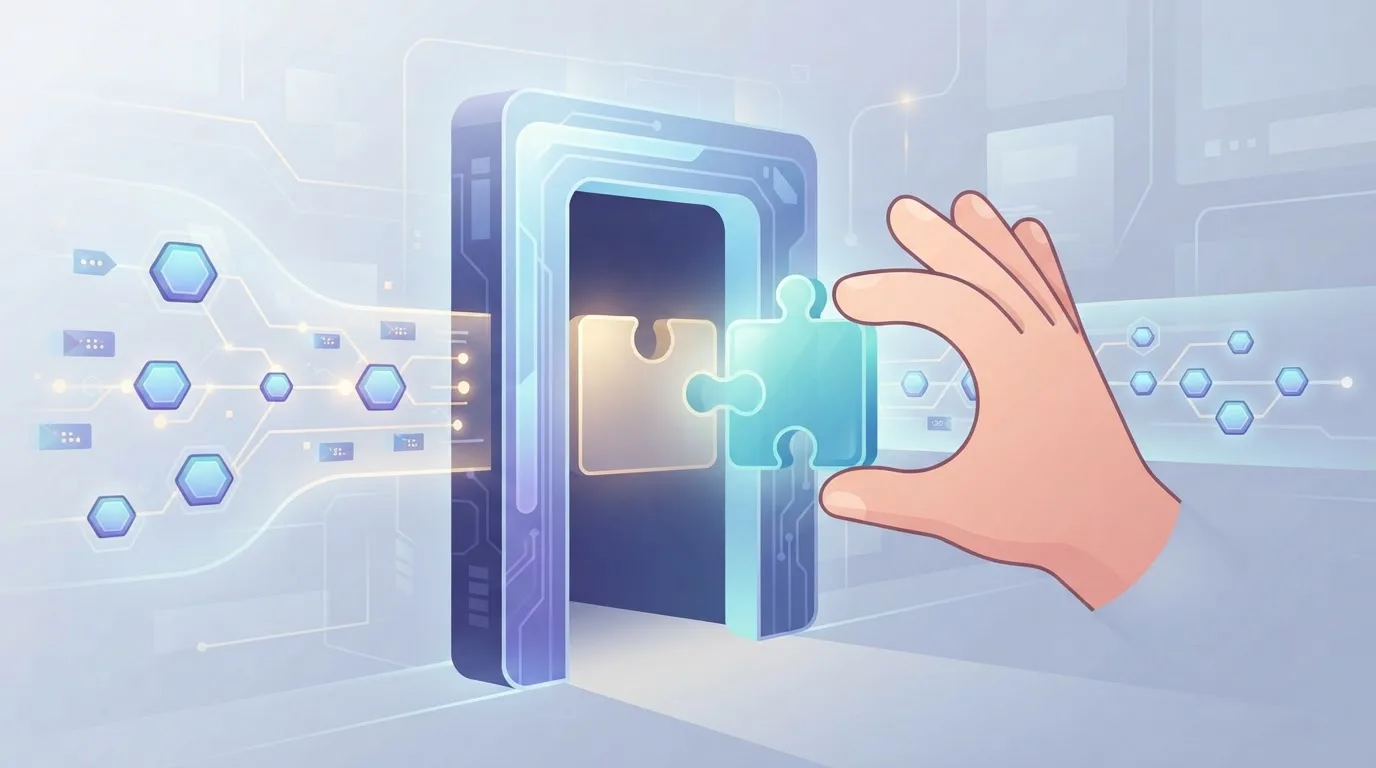
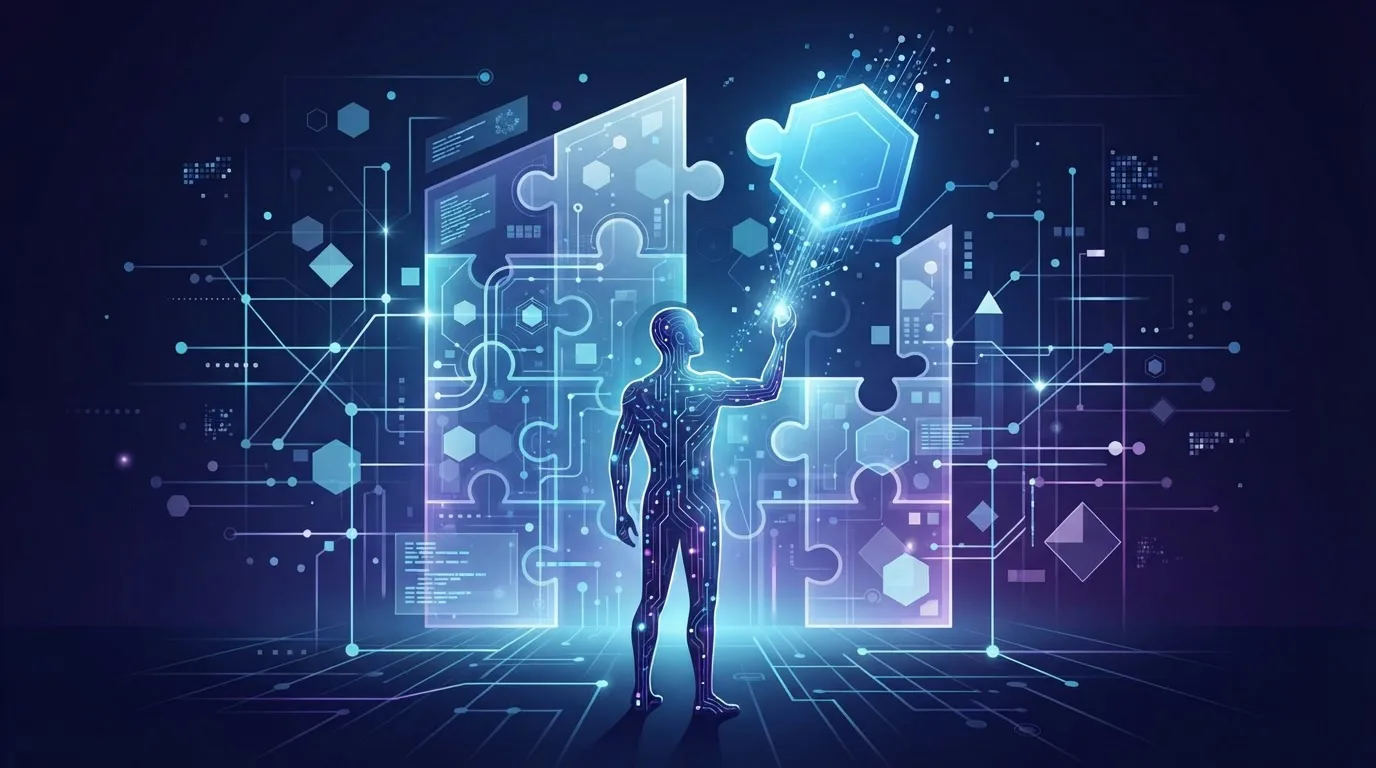
Captcha's Final Puzzle explores the evolution of the silent sentinel that guards our digital world, revealing how this invisible gatekeeper adapts to outsmart ever-advancing bots while shaping the future of online security.
Captcha's Final Puzzle: The Silent Sentinel
Every day, billions of times, an invisible gatekeeper decides whether you are human or machine. It never sleeps, never blinks, and never forgives a wrong answer. This is the CAPTCHA - the silent sentinel standing between your business and the relentless tide of automated abuse. But here's the uncomfortable truth: the same puzzle that protects your forms, your logins, and your data is also costing you real users and real revenue. The final puzzle isn't about solving the CAPTCHA itself - it's about understanding how this sentinel evolved, why it keeps changing its face, and what that means for anyone who depends on frictionless online interactions.
The Arms Race You Didn't Ask to Join
CAPTCHA was never meant to be permanent. When Carnegie Mellon researchers coined the term in 2000, they imagined a simple test that could tell humans from machines. Two decades later, we're stuck in a perpetual arms race: every time bot builders crack a puzzle, the sentinel mutates into something harder. The result? A paradox. The more secure the CAPTCHA becomes, the more it punishes the very humans it was designed to protect.
Consider this: a 2023 industry study found that complex CAPTCHAs increase form abandonment rates by up to 40%. For an e-commerce checkout, that's nearly half your paying customers walking away because a distorted word or a grid of traffic lights refuses to cooperate. The sentinel is winning the war against bots, but it's also burning down the village to save it.
Why the Sentinel Keeps Changing Its Face
The fundamental problem is that bots learn. A CAPTCHA that takes a human 10 seconds to solve takes a well-trained neural network milliseconds. So the industry pivoted. Let's break down the major evolutionary stages - and why each one eventually failed.
Stage One: The Distorted Text Era
Early CAPTCHAs used warped letters and numbers. Simple, effective, and brutally annoying. The decline came when optical character recognition (OCR) improved beyond human accuracy. By 2014, most text-based CAPTCHAs could be solved by free open-source tools with a 99% success rate. The sentinel's first armor was rendered useless.
Stage Two: Image Recognition Puzzles
"Select all squares with traffic lights." This became the standard response. It worked because image classification was harder for bots than OCR. But then deep learning happened. Convolutional neural networks trained on public datasets achieved 98% accuracy on these puzzles within months. Worse, the puzzles became so subjective that humans started failing them regularly. You know the frustration: you click the correct squares, and the system tells you to try again.
Stage Three: Invisible and Behavioral Analysis
The modern sentinel doesn't always show its face. Invisible CAPTCHAs monitor your mouse movements, typing rhythm, scroll patterns, and even browser history. They build a behavioral fingerprint and decide your humanity without you ever clicking a checkbox. This is the "silent" part of the silent sentinel. It's elegant - until it isn't.
The problem? False positives. Legitimate users with unusual browsing habits, privacy extensions, or older browsers get flagged as bots. The sentinel becomes a gatekeeper that locks out the very people you want inside.
The Real Cost of Friction
Let's be concrete about what this means for your business. Every CAPTCHA interaction is a moment of friction. Friction translates directly into:
- Abandoned registrations: A 2022 analysis of SaaS onboarding flows showed that adding a CAPTCHA to the signup form reduced successful registrations by 12-18%. That's not a small number.
- Support tickets: "I can't pass the CAPTCHA" is a recurring theme in help desk queues. Each ticket costs you time and money.
- Mobile user drop-off: On mobile, CAPTCHAs are even more painful. Tiny images, mis-tapped squares, and keyboard switching. Mobile conversion rates drop disproportionately when a puzzle appears.
- Brand perception: Users don't blame the CAPTCHA. They blame you. "This site is annoying" becomes "this company doesn't respect my time."
Here's a hypothetical but realistic scenario. Imagine you run a lead generation form for a B2B service. You get 1,000 visits per day. Your form has a 5% conversion rate without any CAPTCHA. You add a standard image CAPTCHA for protection. The conversion rate drops to 3%. That's 20 lost leads per day. At a 10% close rate and a $2,000 average deal value, you're losing $4,000 per day - $1.46 million per year - to protect yourself from bots that might have been 5% of your traffic. The math doesn't work.
The Silent Sentinel's New Strategy: Invisible Protection
The industry's answer to this friction problem is moving toward invisible, risk-based analysis. Instead of challenging every user, the sentinel now profiles you silently. It asks: "Does this interaction look human?" If yes, you pass without any puzzle. If suspicious, the system escalates to a challenge.
This is where the concept of captcha click enters the picture. In modern implementations, the entire interaction can be reduced to a single click on a checkbox - or even no click at all. The system analyzes the micro-interaction: the speed of your cursor movement, the slight acceleration before the click, the pause hesitation that humans naturally exhibit. Bots, even sophisticated ones, struggle to replicate these micro-patterns perfectly. The click itself becomes the test.
How Risk-Based Scoring Works
Behind the scenes, the sentinel assigns a risk score to every session. Here's a simplified pseudocode representation:
def assess_risk(session_data):
    score = 0

    # Behavioral signals
    if session_data.mouse_trajectory.curvature > 0.3:
        score += 20  # human-like movement
    if session_data.time_on_page > 5_seconds:
        score += 15  # human reading time
    if session_data.typing_speed_variance > 0.15:
        score += 25  # humans type irregularly

    # Environmental signals
    if session_data.browser_history_depth > 20:
        score += 15  # real browsing history
    if session_data.ip_reputation == 'clean':
        score += 20

    # Bot signals
    if session_data.headless_browser == True:
        score -= 50

    if score >= 70:
        return 'pass'  # no challenge
    elif score >= 40:
        return 'click'  # single captcha click
    else:
        return 'challenge'  # full puzzle
This approach keeps the sentinel silent for 80-90% of legitimate users while still blocking the vast majority of automated traffic. The cost? A sophisticated implementation that requires constant tuning. The benefit? A user experience that feels almost frictionless.
Practical Steps to Deploy Your Own Sentinel
If you're a developer or business owner looking to implement CAPTCHA protection without destroying your conversion rates, here's a practical roadmap:
- Start with risk-based assessment, not puzzles. Choose a service that offers behavioral analysis as the first line of defense. Only escalate to visible challenges for high-risk sessions.
- Leverage multi-factor signals. Combine IP reputation, browser fingerprinting, and behavioral analysis. Don't rely on a single signal - bots can spoof any one metric, but spoofing all three consistently is exponentially harder.
- Set your tolerance thresholds carefully. Start with a lenient threshold that catches obvious bots (headless browsers, known datacenter IPs) and gradually tighten as you collect data on your legitimate traffic patterns.
- Monitor false positives relentlessly. If your support team reports an increase in "I can't log in" tickets, your threshold is too aggressive. Adjust immediately.
- Use A/B testing to measure the impact. Run a control group with your old CAPTCHA and a test group with the silent sentinel. Track conversion rates, time-on-task, and bot traffic. Let the data decide.
For teams that want to skip the infrastructure headache, services like NonCaptcha handle the heavy lifting. They offer a drop-in solution that integrates with your existing forms and login flows, using a combination of AI-driven behavioral analysis and adaptive challenges. The API is straightforward - you make a request, get a token, and validate it on your server.
// Example integration with a form submission
const form = document.getElementById('my-form');
form.addEventListener('submit', async (e) => {
  e.preventDefault();

  const token = await NonCaptcha.getToken();
  const response = await fetch('/api/submit', {
    method: 'POST',
    body: JSON.stringify({ formData: ..., token })
  });

  if (response.ok) {
    // Proceed with normal flow
  }
});
The Future of the Silent Sentinel
The CAPTCHA is not dying - it's disappearing. The next generation of protection will be fully invisible. It will use device intelligence, network analysis, and AI to make real-time decisions in milliseconds. The puzzle you see today is the last visible remnant of a system that's evolving into pure background technology.
But this evolution brings a new challenge: privacy. The more behavioral data the sentinel collects, the more it resembles surveillance. The industry must find a balance - enough data to detect bots, not enough to profile individuals. Expect regulation to shape this space in the coming years.
For now, the practical takeaway is clear: the silent sentinel is your ally, not your enemy. The enemy is friction. Choose a CAPTCHA solution that protects your backend without punishing your frontend users. Test, measure, and iterate. Your conversion rate - and your users' patience - will thank you.
The final puzzle isn't about cracking a code. It's about building a gate that opens silently for humans and slams shut for bots. That's the future of online security. And it's closer than you think.
Related articles

The Unseen Gate: Captcha's New Era

Captcha's Next Move: The Frictionless Wall