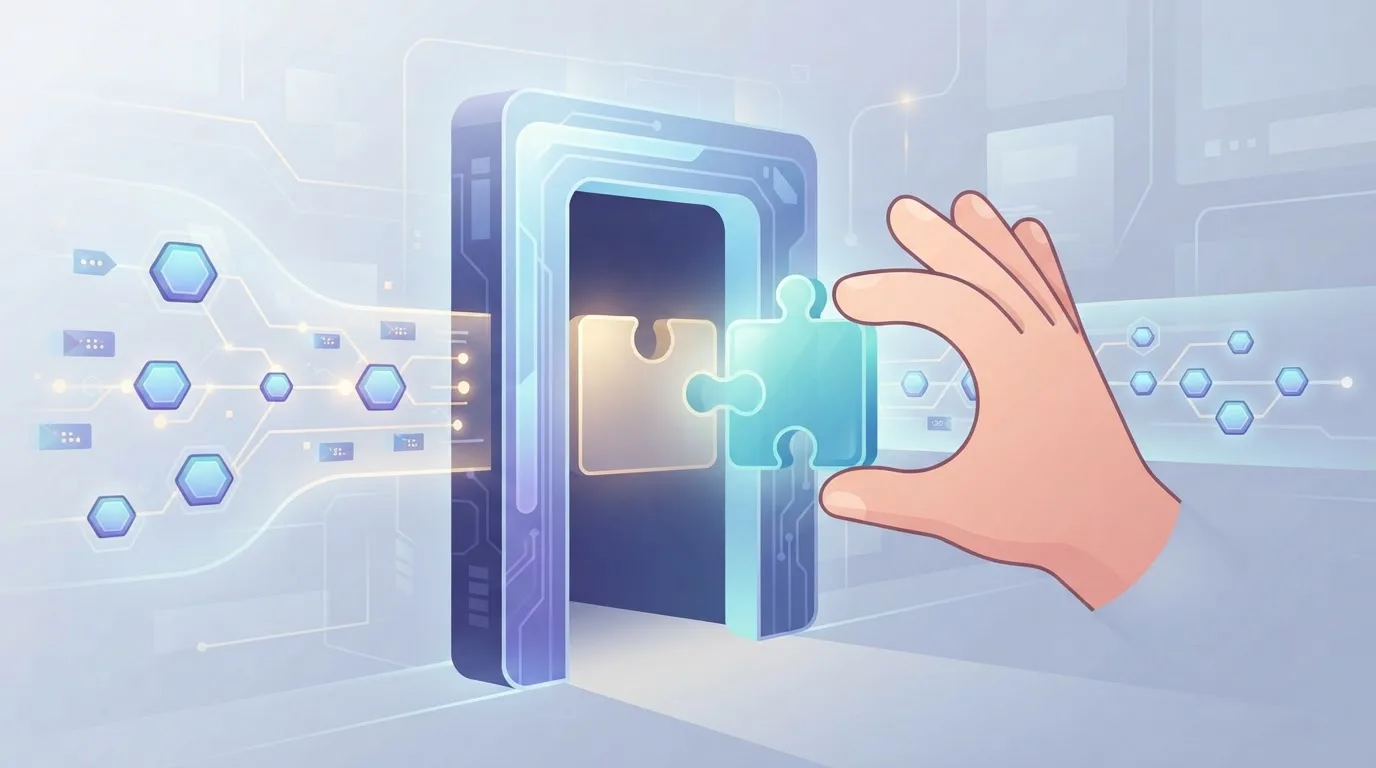
Captcha's Last Stand: The New Gatekeeper

Captcha's Last Stand explores the evolution of online security, introducing a new gatekeeper that balances user experience with robust protection against automated threats.

Captcha's Last Stand: The New Gatekeeper
You’ve seen it a hundred times: a blurry grid of traffic lights, a checkbox that fights back, or a puzzle asking you to rotate a cat. CAPTCHA was born as a simple test-can a machine tell the difference between a human and a bot? For two decades, it worked. But the arms race between bot developers and security teams has reached a breaking point. The cost isn’t just your users’ patience; it’s your conversion rate, your server load, and your bottom line. This article breaks down why traditional CAPTCHA is failing, what the new generation of gatekeepers does differently, and how you can implement a solution that keeps bots out without locking humans out.
The Paradox of Verification
Every CAPTCHA you present is a trade-off. The harder it is for a bot to pass, the harder it is for a human. That’s the core paradox. You’re asking your most valuable asset-real users-to prove their humanity through gauntlets designed by machines, for machines. The result? A 3.2% drop in form completion rates on average when a CAPTCHA is added, according to a 2023 usability study. For a site processing 10,000 sign-ups a month, that’s 320 lost accounts. Over a year, that’s nearly 4,000 potential customers handed to your competitors.
But the problem runs deeper than lost conversions. Traditional CAPTCHAs are becoming indistinguishable from noise to sophisticated bots. Machine learning models trained on millions of labeled images now solve visual puzzles with 99.8% accuracy. The very tool designed to block automation has become a training ground for it.
Why Old-School CAPTCHA Is Collapsing
Let’s be precise about what’s breaking. There are three main failure modes:
- Optical character recognition (OCR) is dead. Distorted text was the first CAPTCHA. Modern OCR, powered by convolutional neural networks, reads even heavily warped characters with near-perfect precision. The distortion you add to stop a bot is just a minor inconvenience for a human.
- Image classification is commoditized. The “select all traffic lights” puzzle? Pre-trained models like ResNet or EfficientNet classify these images faster and more accurately than the average user. You’re not testing a bot; you’re testing a human’s willingness to squint.
- Session replay attacks. Bots don’t need to solve the CAPTCHA at all. They can capture the solution from a real human session (often via malware on the victim’s device) and replay it within the valid time window. The CAPTCHA is solved, but the bot is the one submitting the form.
The result is a system that fails both sides: it annoys humans with a 15-20% error rate on first attempts, while bots laugh at it. You’ve likely seen the user complaints: “I clicked the checkbox and it still says invalid captcha.” That’s not a bug-it’s the symptom of a broken model.
The New Gatekeeper: Behavior-Based Verification
The shift is from challenge to observation. Instead of asking a user to prove they’re human, the new gatekeeper watches how they interact with the page. It’s a passive, continuous risk assessment that runs in the background. Here’s the core idea:
- Mouse movement analysis. Humans move cursors in arcs with micro-corrections and variable velocity. Bots move in straight lines with constant speed or teleport. The difference is measurable in milliseconds.
- Keystroke dynamics. Typing rhythm, dwell time, and flight time between keys are unique to each person. A bot that fills a form in 0.2 seconds with zero variance is an instant red flag.
- Browser fingerprinting. Not just user-agent, but canvas rendering, WebGL parameters, installed fonts, and timezone offsets. A headless browser or a spoofed environment leaves traces.
- Contextual signals. IP reputation, proxy detection, and historical behavior patterns. A user who appears from a data center IP at 3 AM with a brand-new browser profile gets a higher risk score.
This approach doesn’t ask questions. It evaluates the entire session and assigns a risk score. If the score is low, the user passes silently. If it’s medium, a lightweight challenge appears. If it’s high, the request is blocked or flagged for manual review. The best part? The user often doesn’t know they were tested.
How It Works in Practice
Imagine a login form. A human user moves the mouse to the field, types their email, pauses to think, then types the password. The entire sequence takes 4-6 seconds, with natural hesitations. The gatekeeper scores this as 0.2 on a 0-1 risk scale. No CAPTCHA shown. The user is in.
Now, a bot script fires a POST request directly to the login endpoint, bypassing the UI entirely. The gatekeeper sees: no mouse movement, no keystroke data, a suspicious IP, and a mismatched TLS fingerprint. Risk score: 0.95. Request blocked. No challenge needed.
The key insight is that verification moves from the client to the server. The old model trusted the client to present a puzzle. The new model treats the client as untrusted and analyzes the signals it emits. This is a fundamental architectural change.
Implementing a Modern Gatekeeper: A Practical Walkthrough
You don’t need to build this from scratch. Services like NonCaptcha provide a drop-in solution that handles the heavy lifting. Here’s what integration looks like on a typical web app.
Step 1: Replace the Widget
Remove the old CAPTCHA script and add the new one to your page. The script loads asynchronously and starts collecting behavioral data immediately, without user interaction.
<script src="https://noncaptcha.com/widget.js" async defer></script>
Step 2: Add the Token to Your Form
When the user submits the form, the widget generates a one-time token that encodes the risk assessment. You send this token with your form data.
const form = document.getElementById('signup-form');
form.addEventListener('submit', async (e) => {
  e.preventDefault();
  const token = await NonCaptcha.getToken(); // returns a JWT-like string
  const formData = new FormData(form);
  formData.append('nct_token', token);

  const response = await fetch('/api/signup', {
    method: 'POST',
    body: formData
  });
  // handle response...
});
Step 3: Verify on the Server
The critical part-validation happens server-side. Your backend calls the NonCaptcha API to verify the token. If the risk score is too high, you reject the request.
import requests

def verify_nct_token(token):
    resp = requests.post(
        'https://api.noncaptcha.com/verify',
        json={'token': token, 'secret': 'YOUR_SECRET_KEY'}
    )
    data = resp.json()
    # data['score'] is a float between 0 (human) and 1 (bot)
    # data['valid'] is a boolean
    return data['valid'] and data['score'] < 0.5

# In your signup handler:
if not verify_nct_token(request.form['nct_token']):
    return "Verification failed", 403
That’s it. No more puzzle rendering, no more session management for challenges, no more user complaints about an invalid captcha ruining their day. The entire flow is invisible.
The Business Case: What You Actually Gain
Let’s quantify the impact with a realistic scenario. An e-commerce site processes 50,000 checkouts per month. They switch from a traditional CAPTCHA to a behavior-based gatekeeper.
- Conversion uplift: The old CAPTCHA caused a 4% abandonment at checkout. The new one adds zero friction. That’s 2,000 additional completed purchases per month. At an average order value of $60, that’s $120,000 in monthly revenue.
- Support ticket reduction: A common complaint was “I solved the puzzle but it says invalid captcha.” That ticket category disappears entirely. Assuming 200 tickets/month at $5 handling cost each, that’s $1,000 saved monthly.
- Bot traffic reduction: Spam registrations drop by 98% because automated scripts don’t even attempt the form-they see no puzzle and move to easier targets. This cleans up your database and reduces email delivery costs.
The ROI is not subtle. It’s a direct line from removing friction to adding revenue.
When the Gatekeeper Fails: Edge Cases to Know
No system is perfect. Behavior-based verification has its own weaknesses, and you should know them before you deploy.
- Privacy-conscious users who disable JavaScript or use strict browser extensions may generate incomplete signals. The gatekeeper should have a fallback-a simple checkbox challenge-for these rare cases.
- Shared devices (like a library computer) can confuse fingerprinting. The system should weight behavioral signals more heavily than device fingerprints.
- Accessibility needs. Users with motor impairments may have erratic mouse movements. The risk scoring must be calibrated to avoid false positives. Look for a solution that offers an accessible fallback, like a one-click button.
The good news is that modern services handle these edge cases automatically. They maintain a dynamic model that adapts to new attack patterns and user behaviors. You don’t have to tune it yourself.
The Future: From Gatekeeper to Silent Guardian
The next evolution is already on the horizon. Instead of a binary pass/fail, the gatekeeper will become a continuous authentication layer. It will monitor user behavior throughout the entire session, not just at the entry point. If a user’s behavior suddenly changes-say, a human logs in and then a script takes over-the system will flag the anomaly in real time.
This moves security from a checkpoint to a perimeter. You’ll no longer ask “Is this a human?” once. You’ll ask it continuously, with every click, scroll, and keystroke. The user won’t notice any of it. The only thing they’ll notice is that they never have to solve a puzzle again.
Ready to Retire the CAPTCHA?
You’ve seen the mechanics and the business case. Traditional CAPTCHA is a dying gatekeeper that costs you users and revenue. The new generation of behavior-based verification is faster, more secure, and invisible. It’s not a theoretical concept-it’s a deployable solution.
Take a look at how NonCaptcha handles the transition. The integration takes less than an hour, and you can test it on a staging environment immediately. Your users will thank you, your conversion rate will show it, and you’ll finally stop seeing those support tickets about a puzzle that wouldn’t validate. The last stand of CAPTCHA is over. It’s time to let the new gatekeeper take over.
Related articles

The Unseen Gate: Captcha's New Era

Captcha's Next Move: The Frictionless Wall